
Target Domain
a specific, clearly defined, and measurable component of a broader domain.
Terms related to the planning, design, conduct, analysis, and interpretation of research studies. This category includes study types, methodological approaches, data collection processes, trial design concepts, and strategies used to ensure scientific rigor, reliability, and validity in research.
a standardized dissemination tool developed by OMERACT to concisely present key evidence about an outcome measure’s performance, measurement properties, and final disposition.
Sumary of Measurement Properties Table (SOMP) Read More »
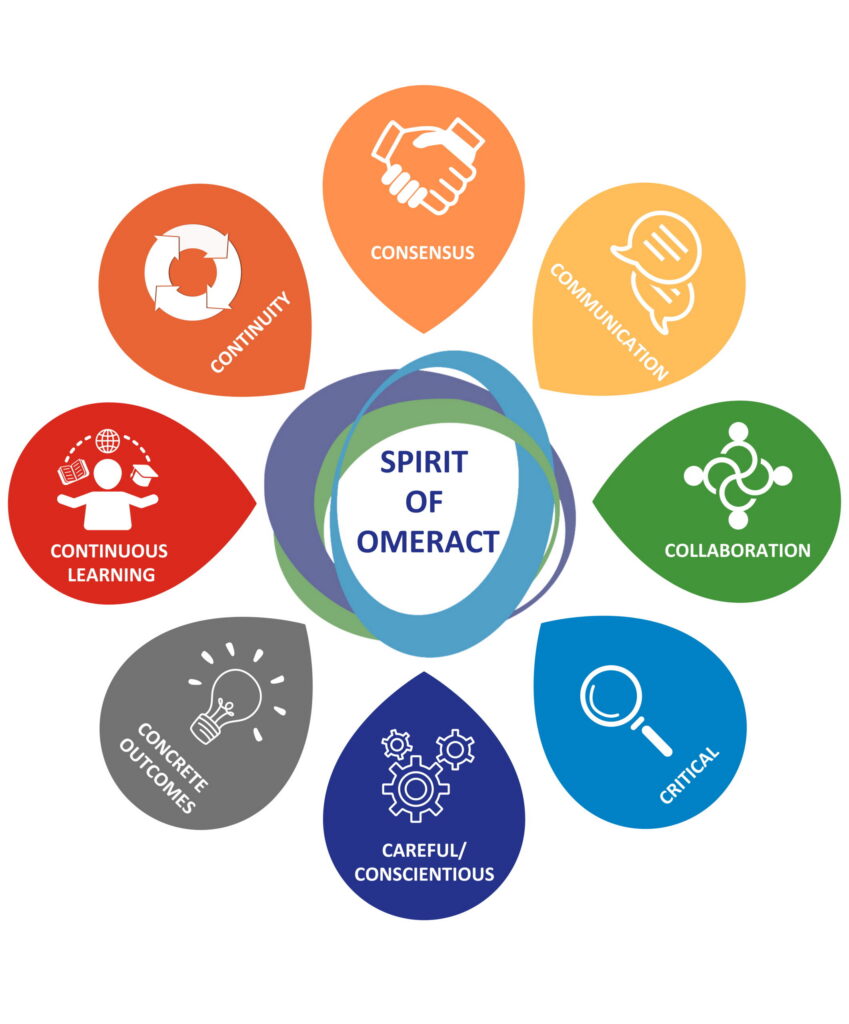
represents the foundational principles and values that drive the mission of OMERACT.
Spirit of OMERACT (8C) Read More »
a small, focused session that brings together participants who share an interest in a specific research topic.
Special Interest Group (SIG) Read More »
the factors or conditions that cause differences (variation) in data, measurements, or outcomes within a study or process.
Sources of Variability Read More »
the collection of factors that define the studies and circumstances to which a core outcome set (COS) or research study applies.
a form of evidence synthesis that maps and summarizes the breadth and nature of existing research on a particular topic or question.
an outcome reflecting the patient’s perspective on treatment-related adverse events in people with rheumatic and musculoskeletal diseases enrolled in clinical trials.
the likelihood that a study, review, or analysis contains systematic errors or deviations from the truth that may distort its results or conclusions.
Risk of Bias (RoB) Read More »
refers to the clinical evidence about the usage, benefits, and potential risks of a treatment, medical product, or intervention that is derived from analyzing real-world data (RWD).
Real World Evidence (RWE) Read More »