The OMERACT Handbook

The OMERACT Handbook is currently undergoing a revision once published (ETA November 2025) the latest version of the handbook will be available here. You can download the old version here Handbook June 2021
General OM

CHAPTER 1: FOUNDATIONS, ACHIEVEMENTS, AND ASPIRATIONS

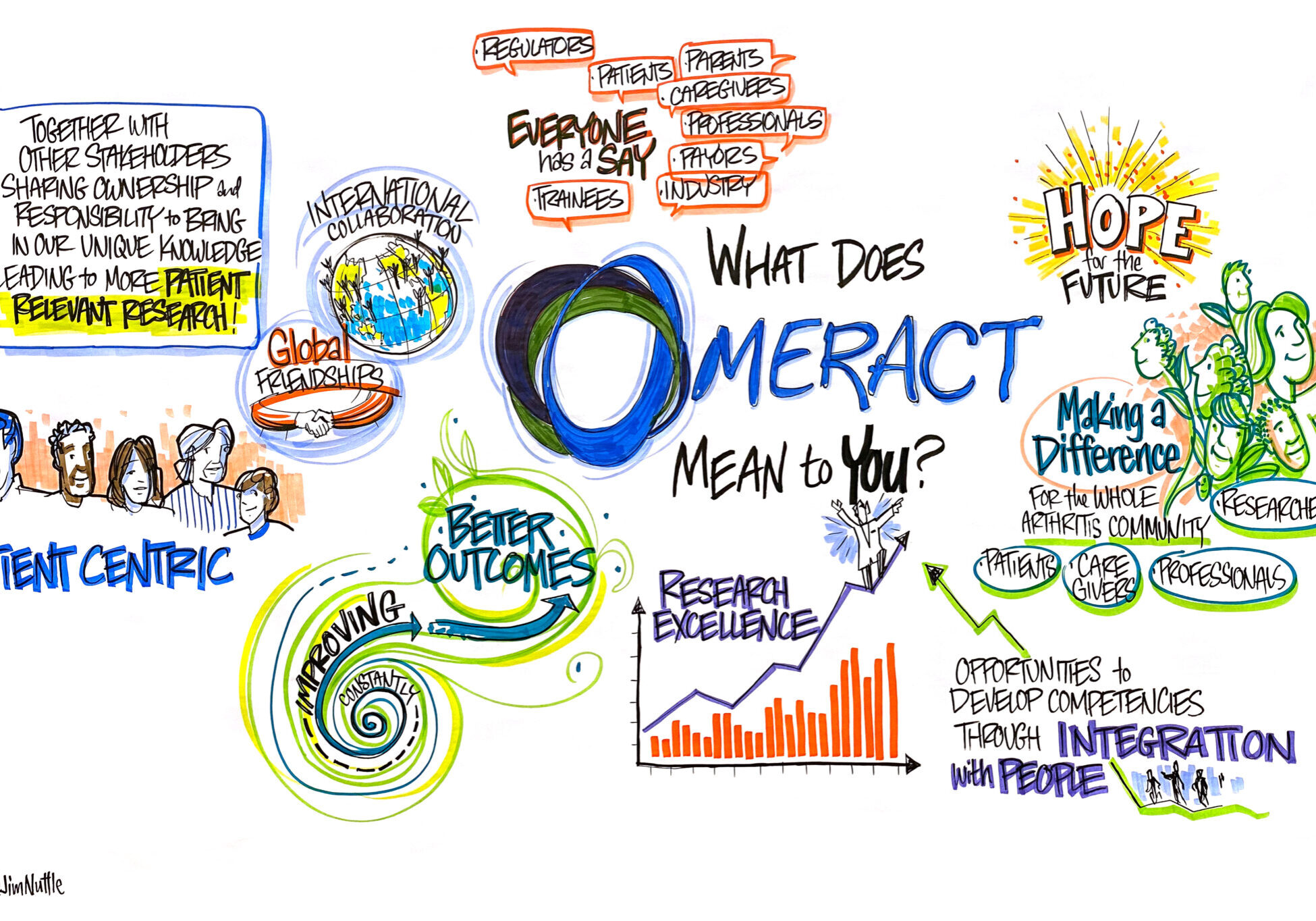
Introduces the purpose and history of OMERACT and the concept of Core Outcome Sets. The chapter explains how OMERACT’s methodology, including the OMERACT Filter and active involvement of Patient Research Partners (PRPs), has shaped best practices in Core Outcome Set development for rheumatology and beyond.

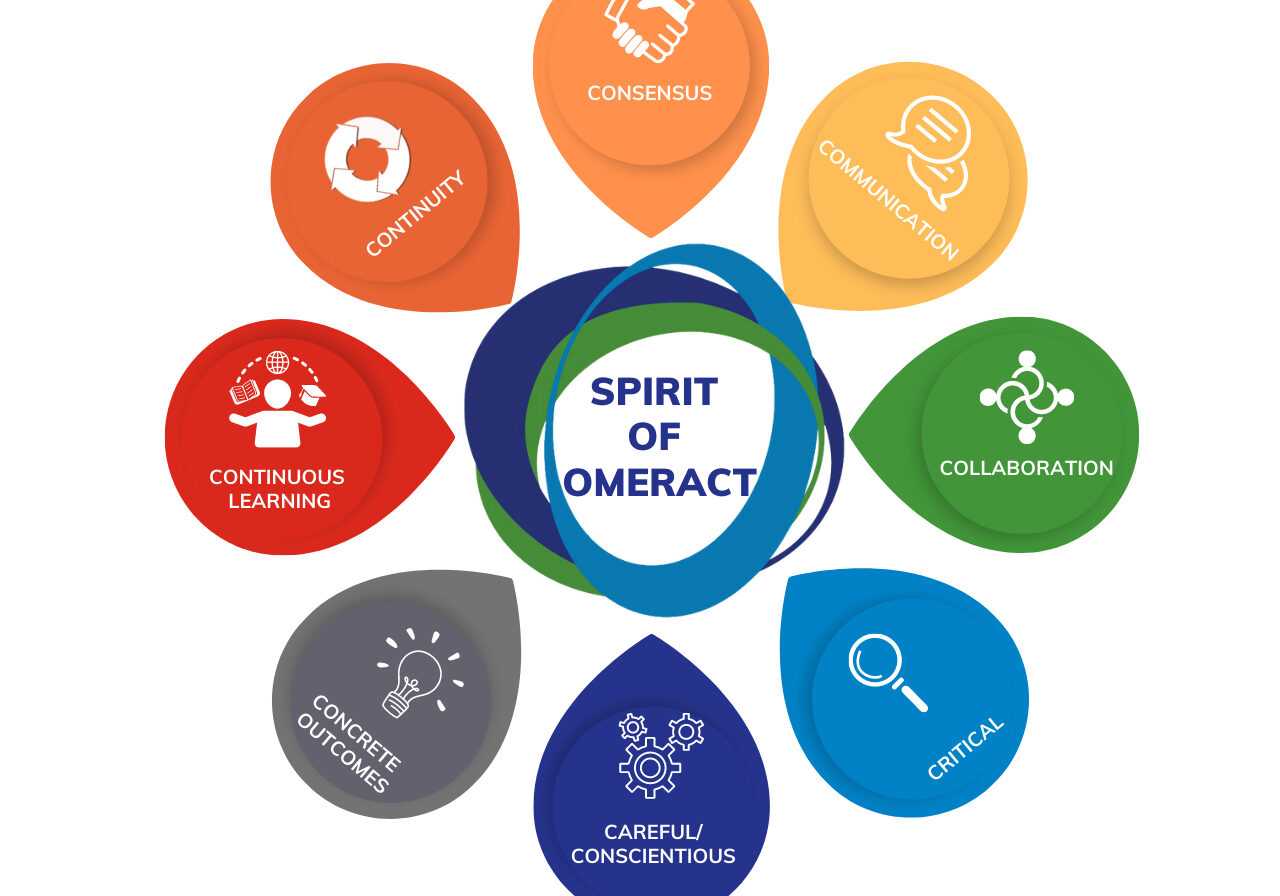
CHAPTER 2: THE SPIRIT OF OMERACT

Defines the “8 Cs of OMERACT”—Consensus, Communication, Collaboration, Critical Thinking, Careful/Conscientious Methods, Concrete Outcomes, Continuous Learning, and Continuity—which capture the values guiding OMERACT’s community and processes. This chapter describes how these principles evolved from the first OMERACT meeting and continue to shape its inclusive, evidence-based, and patient-centred culture.
Spirit of OMERACT - 2
Untitled design

CHAPTER 3 – PATIENT RESEARCH PARTNER ENGAGEMENT

Outlines OMERACT’s pioneering approach to meaningful patient research partner (PRP) engagement in research. It traces the history of PRP involvement since 2002, defines the PRP role, and details structures and support systems that enable equal participation. The chapter provides guidance for sustaining inclusive, well-supported PRP engagement to ensure that outcomes reflect what truly matters to patients.

CHAPTER 4: DEVELOPING CORE DOMAIN SETS

Explains how OMERACT determines what to measure in a Core Outcome Set. It introduces the OMERACT Onion framework for prioritizing domains, the Core Domain Set Development Pathway, and checklists to guide working groups. The chapter emphasizes collaboration to ensure that selected domains capture the full impact of a condition and its treatment.
Figure 4.1 OMERACT Core Domain Set Development Pathway
1

CHAPTER 5. EVIDENCE BASED DECISION MAKING FOR THE SELECTION OF INSTRUMENTS FOR CORE OUTCOME SETS: PART A

This chapter introduces the OMERACT Filter 2.3 Instrument Selection Algorithm (OFISA) and guides Working Groups through the first stage of selecting instruments for Core Outcome Sets Part A: Domain Match and Feasibility. It explains how to identify suitable instruments that align conceptually with the target domain, assess their practical feasibility, and determine which should progress for full evaluation. The chapter presents the OMERACT Instrument Selection Checklist: Part A, details the composition of Working Groups, outlines methods for identifying candidate instruments, and describes how to document progress using the Summary of Measurement Properties (SOMP) table. The process ensures transparency and consistency across groups applying the OMERACT Filter’s principles of truth, discrimination, and feasibility

CHAPTER 5. EVIDENCE BASED DECISION MAKING FOR THE SELECTION OF INSTRUMENTS FOR CORE OUTCOME SETS: PART B

Part B continues the instrument selection process by providing guidance on the systematic review and synthesis of validity evidence for instruments that passed Part A. It focuses on evaluating whether numeric scores make sense (truth) and whether instruments can discriminate between groups of interest (discrimination). The chapter outlines a step-by-step approach for conducting and reporting systematic reviews of measurement properties, completing the SOMP and related narrative tables, and determining endorsement levels using the OMERACT Filter 2.3. It also highlights the roles of the Technical Advisory Group (TAG), quality appraisal procedures, and reporting standards to ensure rigor and transparency before ratification by the OMERACT community.
2
Figure 6. 1 OMERACT Core Outcome Set Methodology Pathway

CHAPTER 6 – OMERACT METHODS WORKING GROUPS FOR DEVELOPING AND REFINING CORE OUTCOME SET AND RELATED METHODOLOGIES

Provides a methods-development roadmap for OMERACT Working Groups. It describes how methodological innovations such as improved Delphi methods, PRP engagement metrics, AI tools, and composite outcome frameworks are proposed, reviewed, and implemented. The chapter introduces the OMERACT Checklist for Developing or Refining Methodologies to maintain rigour, transparency, and adaptability.
Scroll to Top