
Glossary Term
PICOC
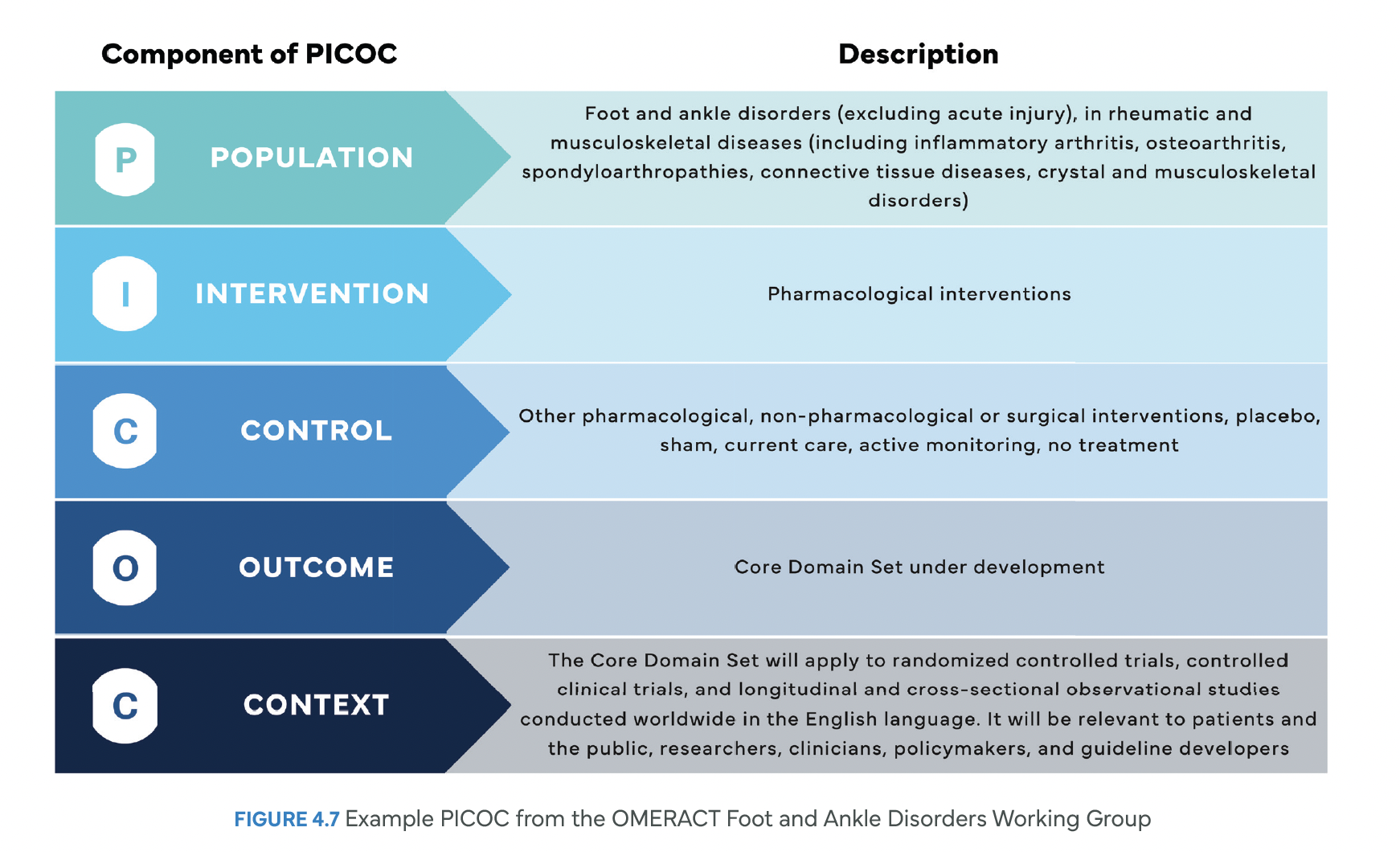
an extension of the PICO framework used in evidence-based practice to formulate clear, answerable clinical or health care questions and to guide literature search strategies. It builds on PICO — which stands for Population, Intervention, Comparison/Control/Comparator, and Outcomes — by adding a C for Context, allowing researchers to specify the setting, environment, or circumstances in which an intervention is applied.
Examples
A rheumatology researcher wants to investigate the effectiveness of a physical therapy intervention for knee osteoarthritis:
P (Population): Adults aged 50+ with moderate knee osteoarthritis
I (Intervention): Supervised exercise-based physical therapy
C (Comparison): Home exercise program without supervision
O (Outcomes): Reduction in pain and improvement in physical function at 6 months
C (Context): Outpatient musculoskeletal rehabilitation clinics
Using PICOC, the question becomes:
Among adults aged 50+ with moderate knee osteoarthritis (P), does supervised exercise-based physical therapy (I) compared to a home exercise program without supervision (C) reduce pain and improve physical function at 6 months (O) in outpatient musculoskeletal rehabilitation clinics (C)?